 Land Value Taxation received a good airing in the FT this week. It started with an article by Tory MP Nicholas Boles who wrote a piece entitled: It sounds bonkers but we should embrace a land tax. Boles suggests that taxing land value is usually associated only with those not in the mainstream but he points out how in particular a version of the tax in use in New South Wales works well in stimulating land use.
Two letters appeared later in the week:
Right first time – a land value tax would be ‘bonkers’
From Mr Kevin Cahill.
Sir, Nicholas Boles would have done well to stick to his Conservative instincts and eschew the idea of a land value tax, first proposed in the 19th century when less than 4.5 per cent of the population held all the land of the UK (“
It sounds bonkers but we should embrace a land tax”, September 30).
The commonest characteristic of those currently advocating this totally obsolete tax, apart from their peculiar political backgrounds, is that almost none of them know anything about tax, economics and least of all land. Mr Boles excludes farmers and domestic dwellers from land value tax. In so doing he excludes about 80 per cent of all land in the UK. Another 15 per cent of the remainder is road, mountain, bog and moor, so is untaxable. He would apply land value tax, as do most of its advocates, mainly to commercial property, already taxed through business rates. A bad tax would simply be followed by an insane one. And Mr Boles has overlooked that most currently decisive of land value issues, its plummeting price. Land value tax might work if universally applied in a rising market. In a falling market it would simply make any government deficit significantly worse. As your headline writer so elegantly put it, “bonkers”.
Kevin Cahill, Exeter, Devon, UK
and then today:
Who’s ‘bonkers’ about a land tax?
From Mr Geoff Copeland.
Sir,
Kevin Cahill ascribes the commonest characteristics of those advocating a land tax as of “peculiar political backgrounds” and that “almost none of them knows anything about tax, economics and least of all land” (Letters, October 4).
I believe that in the past both
Sir Samuel Brittan and
Martin Wolf have written warmly of this tax in your columns, albeit in a somewhat more comprehensive form than Nicholas Boles MP suggests. Would Mr Cahill regard them as “bonkers”? Or is it Mr Cahill’s political persuasion that informs him?
Geoff Copeland, Woodford, Cheshire, UK
The letters have continued this week:
We already have six land taxes!
From Mr Clifford Lawrence.
Sir, I refer to the article by Nicholas Boles proposing a land tax (“It sounds bonkers but we should embrace a land tax”, September 30) and Geoff Copeland’s letter (October 6) giving further support.
They are too late! There are already six such taxes. They are as follows: business rates (when occupying or even not occupying a property), stamp duty land tax (when purchasing), Section 106 payments (when building on the land), the community infrastructure levy (also when building), corporation tax or income tax (on rental income) and capital gains tax (when selling the land).
How many more taxes are they proposing?
Clifford Lawrence, London SW1, UK
Of course he is right but each of these taxes has its disadvantages. How much more simple and efficient would it be if they we collectively replaced by a tax on the rental value of land falling on the owner.

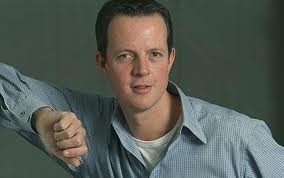 Land Value Taxation received a good airing in the FT this week. It started with an article by Tory MP Nicholas Boles who wrote a piece entitled: It sounds bonkers but we should embrace a land tax. Boles suggests that taxing land value is usually associated only with those not in the mainstream but he points out how in particular a version of the tax in use in New South Wales works well in stimulating land use.